Freestanding baths: sizes, materials and what to check before you buy
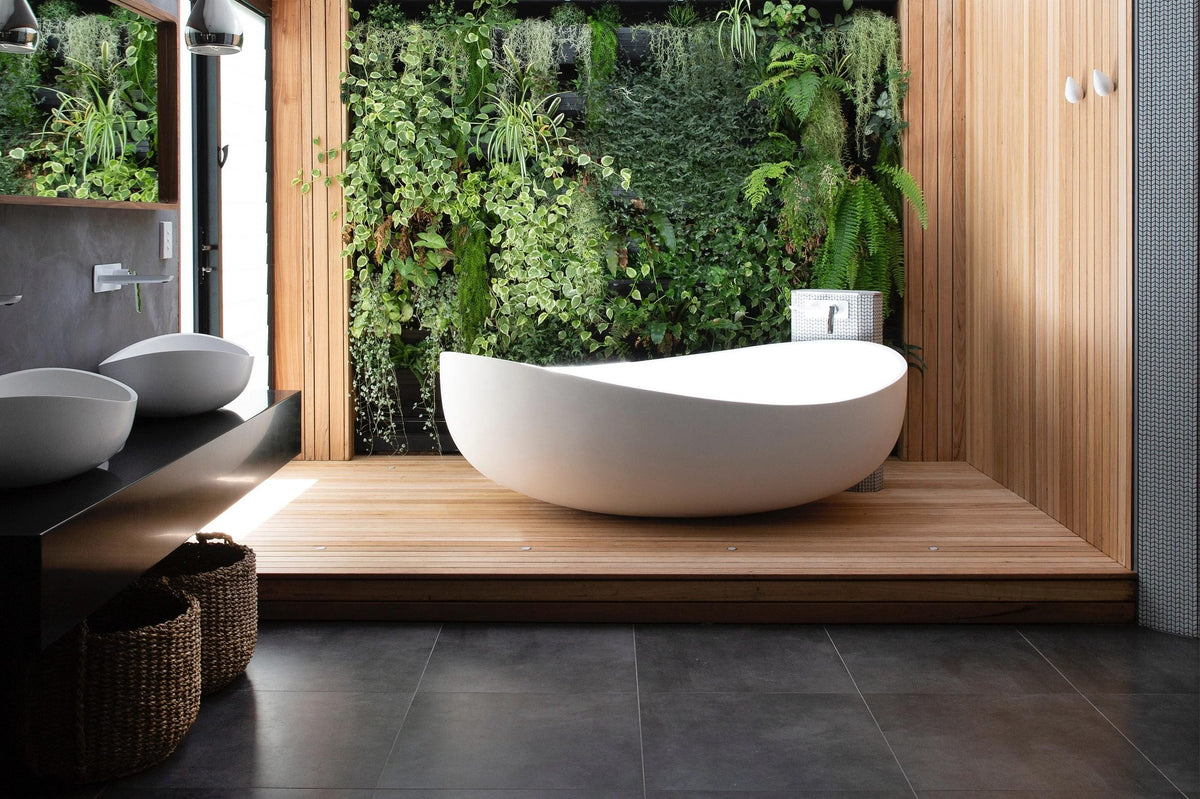
A freestanding bath turns a bathroom into somewhere you want to spend time. It is also a large, heavy object that needs the right space, the right plumbing and the right bath filler. This guide covers the sizes, materials and practical checks that help you choose well.
Sizes and shapes
Freestanding baths commonly range from about 1400mm to 1800mm long. As a rough guide:
- 1400mm to 1500mm suits smaller bathrooms and children, and still gives a good soak for many adults.
- 1600mm to 1700mm is the most popular range and suits most adults.
- 1800mm gives taller people room to stretch out, if you have the floor space.
Width and depth matter too. A deeper bath gives a better soak but uses more water to fill. Check the overflow height, which sets the real water depth, rather than the outside height.
Shapes range from soft ovals and round tubs to slim rectangles. Oval shapes with a sloped back at one or both ends are the most comfortable for lying back. Rectangular and square edged baths suit modern, linear rooms. Browse freestanding baths, for example the Pietra Bianca Olivia 1600mm or the Madu Willow Bath.
Space around the bath
A freestanding bath looks best with breathing room. Leave enough space between the bath and the walls so you can clean behind it, and enough room on the open side to step in and out comfortably. Many designers allow at least 100mm to 150mm to the wall, and more if you want the bath to feel like a feature. If space is tight, a back to wall bath gives the freestanding look with one side against the wall. See back to wall baths and corner baths.
Materials: acrylic or stone
Acrylic
Acrylic baths are light, warm to touch and usually the more affordable option. They are easier to carry into an upstairs bathroom and put less load on the floor. Quality acrylic baths are reinforced so they feel solid.
Stone and solid surface
Stone baths are made from a cast mix of crushed stone and resin. They are heavy, hold heat well and have a matte, sculptural look that suits feature bathrooms. Because of their weight, check the floor can carry the bath when full, especially on suspended timber floors and upper levels. Your builder or engineer can advise. See stone baths from Pietra Bianca and Madu.
Choosing a bath filler
The bath filler is part of the look, and the choice affects the plumbing.
- Floor mounted bath filler. A tall spout rises from the floor beside the bath. It suits baths in the middle of the room. The water supply has to come up through the floor, so it must be planned before the floor is screeded and tiled.
- Wall spout and mixer. A spout on the wall above the bath with a separate wall mixer. Simpler plumbing when the bath sits near a wall.
- Bench or hob mounted. Used where a bath has a deck or ledge.
Many fillers include a hand shower, which makes rinsing hair and cleaning the bath easier. See freestanding spouts and wall mounted spouts.
Wastes and overflow
Freestanding baths drain through a waste in the base, connected to a floor outlet below. Check:
- whether the bath has a built in overflow, or a slot overflow in the waste
- the waste position, centre or end, and whether it lines up with your existing plumbing
- that the waste finish matches your tapware
Getting the floor outlet in the right place is one of the most important early jobs, because it is hard to move once the floor is tiled.
Comfort checks in the showroom
Baths look different in a photo than they feel in person. In the showroom, check the back angle, the rim width and the inside length. If you are buying for an older family member, a lower outside height makes getting in and out easier. Our Geelong and Reservoir showrooms have baths on display, and the team can tell you which models are on the floor before you visit.
Delivery and installation
Freestanding baths are large and heavy, and they are delivered by freight, usually kerbside or to ground level access. Plan who will carry it inside and make sure doorways and halls are wide enough. If you want the bath fitted as part of a renovation, we can quote installation by our qualified trades along with the filler and waste. Start with a free measure and quote.
Common questions
What size freestanding bath do I need?
Most adults are comfortable in a 1600mm to 1700mm bath. Choose 1400mm to 1500mm for small rooms, and 1800mm if you are tall and have the space.
Are stone baths better than acrylic?
They are different. Stone baths hold heat well and have a solid, matte feel, but they are heavy. Acrylic baths are lighter and easier to install upstairs. Both can last many years with the right care.
Do I need a floor mounted bath filler?
Only if the bath sits away from the wall. If it is close to a wall, a wall spout and mixer is often simpler. Either way, the plumbing needs to be planned before the floor is tiled.
Visit us or shop online
See the range in person at our showrooms: Geelong at 35A Ryrie St, Geelong VIC 3220, phone (03) 5223 2765, and Reservoir at 214 Broadway, Reservoir VIC 3073, phone (03) 9867 5051. Both are open Monday to Friday 9:30am to 5:00pm, Saturday 9:30am to 3:00pm, and Sunday by appointment only.
Planning a renovation? Request a quote and a free measure, and ask us to include installation by our qualified trades if you would like it quoted. Prefer to shop from home? Order online with Australia-wide delivery, or pick up from either showroom, usually ready in 2 to 4 days.
Keep reading

Otti and Pietra Bianca: vanities, cabinets, baths and stone basins
An overview of Otti vanities, shaving cabinets and baths, and Pietra Bianca composite stone baths and basins, and how to combine them.
Meir guide: tapware, sinks, accessories and Meir Mobility
An overview of the Meir products at Porcelana, from Round tapware and Lavello sinks to accessories, shower screen hardware and Meir Mobility.
Phoenix Tapware guide: the ranges we stock explained
An overview of the Phoenix Tapware ranges at Porcelana, from Vivid and Radii to Cromford, Lexi, Wiltern, Teel and Axia, and how to choose between them.