Porcelain vs ceramic vs mosaic tiles: which tile goes where

Walk into any tile showroom and you will hear three words over and over: porcelain, ceramic and mosaic. They are not competing products so much as tools for different jobs. Knowing how they differ helps you put the right tile in the right place, and avoid paying for performance you do not need.
Porcelain tiles
Porcelain is made from fine clay fired at very high temperatures. The result is dense and hard, with very low water absorption. Under the international standard for ceramic tiles, porcelain falls in the lowest water absorption group, at 0.5 percent or less.
Where porcelain works best
- Floors throughout the house, including kitchens, hallways and living areas.
- Bathroom floors and walls, especially shower areas.
- Outdoor areas, when the tile is rated for outdoor use and has a suitable slip rating.
- Large format tiles, such as 600x1200mm, which are almost always porcelain because of the strength needed.
Porcelain comes in matt, honed, textured and polished finishes, and in looks that mimic marble, stone, concrete, terrazzo and timber. Browse porcelain tiles, marble look tiles and terrazzo tiles.
Things to know
Because it is so hard, porcelain is harder to cut and drill, and large format pieces need a skilled tiler and a very flat substrate. That is worth remembering when you compare tiler quotes.
Ceramic tiles
Ceramic tiles are fired at lower temperatures from a coarser clay body, then glazed. They absorb more water than porcelain and are softer, which makes them easier to cut and lighter to handle.
Where ceramic works best
- Walls, including bathroom walls outside the wettest zones, kitchen splashbacks and laundries.
- Feature walls, where gloss glazes, handmade looks and strong colours shine.
- Light traffic floors, when the tile is rated for floor use.
Ceramic is where you find many subway tiles, gloss finishes and colourful glazes. See ceramic tiles and 300x600 wall tiles.
Mosaic tiles
Mosaic is a format rather than a material. Mosaics are small tiles, often 50mm or less, supplied on a mesh sheet so they can be laid quickly. They can be porcelain, glass or natural stone such as marble.
Where mosaics work best
- Shower floors, because the many grout lines add grip and the small pieces follow the fall to the waste.
- Niches and feature walls, for texture and pattern.
- Splashbacks, where a finger or hexagon mosaic adds detail behind a sink.
- Curves, such as rounded walls and vanity fronts, where larger tiles cannot bend.
Popular shapes include finger or bamboo mosaics, hexagons, penny rounds and herringbone. Browse mosaic tiles, such as Mini Bamboo Carrara Honed or Hexagonal Carrara Honed.
Things to know
More grout lines means more grout to keep clean. Choosing a grout colour close to the tile, and a good quality grout, makes maintenance easier. Natural stone mosaics need sealing. Our grout guide goes into more detail.
Quick comparison
| Porcelain | Ceramic | Mosaic | |
|---|---|---|---|
| Water absorption | Very low | Higher | Depends on material |
| Best for | Floors, showers, outdoors | Walls, splashbacks | Shower floors, features, curves |
| Cutting | Harder | Easier | Easy on the sheet |
| Grout lines | Few with large format | Moderate | Many |
Matt, honed or polished?
The surface finish matters as much as the material. Matt and textured finishes give more grip underfoot and hide water marks and footprints, which is why they are the usual choice for bathroom floors and outdoor areas. Polished porcelain reflects light and makes a room feel brighter and larger, but it is better suited to walls and dry indoor floors because it can be slippery when wet. Honed finishes sit in between, with a soft sheen and a natural stone feel. Compare matt tiles and polished tiles to see the difference in person.
A simple rule for most bathrooms
Many good bathrooms use all three: a porcelain floor tile, a ceramic or porcelain wall tile, and a mosaic for the shower floor or niche. Keep the palette tight, with two or three colours at most, and let one tile be the feature.
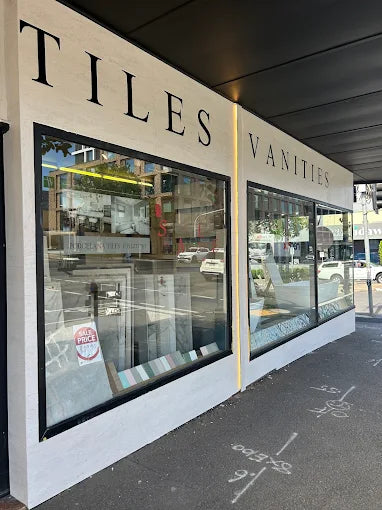
Tiles are call to order at Porcelana, so the best way to choose is to see samples side by side in our Reservoir or Geelong showroom. Bring your floor plan, and if you would like exact quantities, book a free measure. Read our tile sizes guide next.
Related: feature wall tiles guide, subway tiles guide and when to replace or reuse tiles.
Common questions
Is porcelain better than ceramic?
For floors, showers and outdoor areas, porcelain is usually the better choice because it is denser and absorbs very little water. For walls and splashbacks, ceramic is often just as good and easier to cut.
Can mosaic tiles be used on a shower floor?
Yes. Mosaics are a popular shower floor choice because the small tiles follow the fall to the waste and the grout lines add grip. Check the slip rating of the specific mosaic.
Can I order tiles online?
Tiles at Porcelana are call to order. Visit or call our Geelong or Reservoir showroom and we will help with quantities, delivery Australia-wide or pickup.
Visit us or shop online
See the range in person at our showrooms: Geelong at 35A Ryrie St, Geelong VIC 3220, phone (03) 5223 2765, and Reservoir at 214 Broadway, Reservoir VIC 3073, phone (03) 9867 5051. Both are open Monday to Friday 9:30am to 5:00pm, Saturday 9:30am to 3:00pm, and Sunday by appointment only.
Planning a renovation? Request a quote and a free measure, and ask us to include installation by our qualified trades if you would like it quoted. Prefer to shop from home? Order online with Australia-wide delivery, or pick up from either showroom, usually ready in 2 to 4 days.
Keep reading

The best tiles for outdoor alfrescos in Melbourne's north
How to choose alfresco and outdoor tiles for homes in Melbourne's northern suburbs, from slip ratings and sizes to colours that cope with our weather.

Choosing tiles for coastal homes on the Bellarine and Surf Coast
Sand, salt air and wet feet: how to choose tiles for bathrooms, living areas and decks in coastal homes from Torquay to Portarlington.
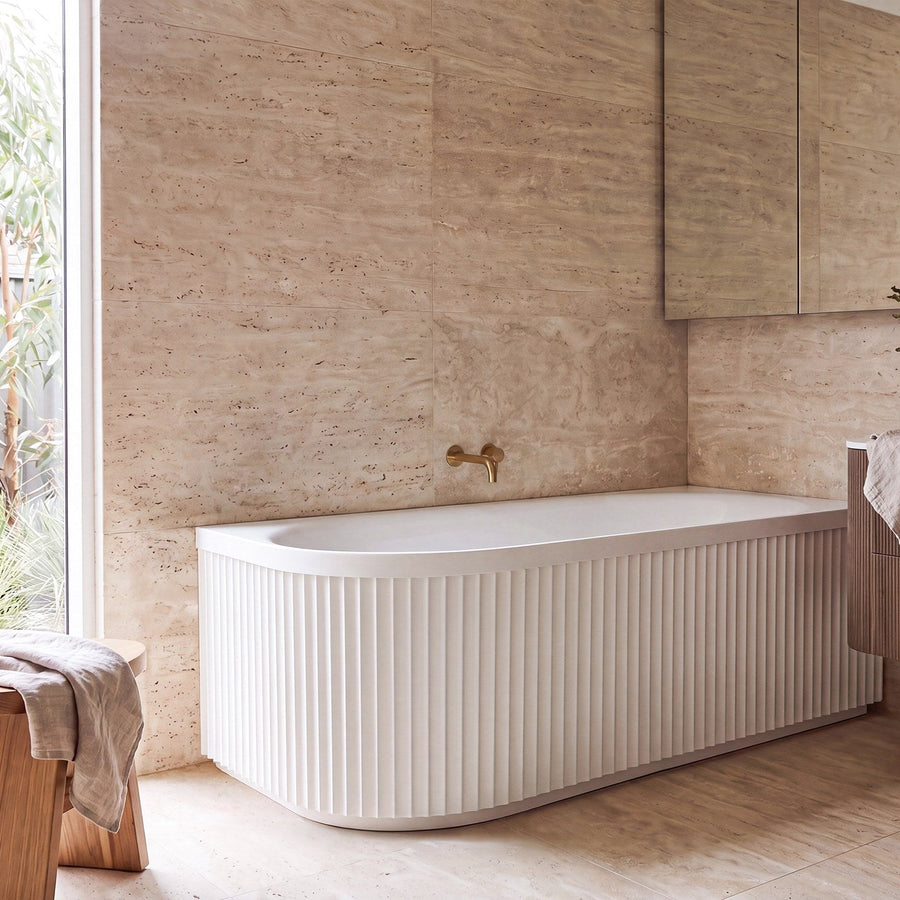
Bathroom trends for 2026 that will still look good in 2036
The bathroom tile, vanity and tapware trends we are seeing in 2026, and how to use them so they still look good in ten years.